 |
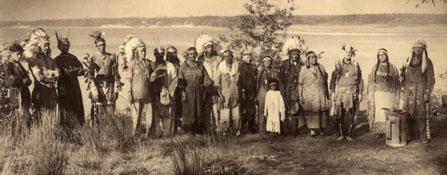
Shinnecocks of Suffolk County, NY. They got the idea for the headresses from the 19th century mass media. |
|
|
Shinnecocks of Suffolk County, NY. They got the idea for the headresses from the 19th century mass media. |
The Indians in the Amityville area of Suffolk County, New York belonged to the Mohegan Montauk tribe and they were further subdivided into groups such as the Massapequans. Contrary to what was in the original Amityville Horror book by Jay Anson the Shinnecocks lived on the East end of the county. Amityville is located near where the border of Dutch and the English controlled Long Island. The English controlled the East and the Dutch the west.
The English Puritans got along well with the local Indians and the great Sachem of Long Island Wyandanch was good friends with the "Father of Long Island" Lionel Gardner. However, there were great battles and killings on the Dutch controlled part of Long Island. Near Amityville a large number of Indians were killed by the Dutch in a battle led by John Underhill, who lived in Salem before coming to Long Island.
Contrary to popular belief the Puritans that settled Long Island did not steal the land from the Indians, they bought it bit by bit for amounts of wealth that was beyond the Indians imagination. The Montauks welcomed the Puritans because they helped free them from their enemies the Pequats.
According to the Amityville Historical Society "In 1653, during the English interregnum, a strip of land running from the Long Island Sound to about where Old Country road now is was purchased from the Indians and the Town of Huntington was established. Soon after, further purchases extend the boundary south English law required that the settlers with grants from the Crown, obtain confirming deeds from the local Indians. In 1658 an Indian deed conveyed West Neck south and Josias Neck which covered all of what is now Amityville south of the then Indian trail now known as Merrick Road." (A Centennial Salute by William T. Lauder 1994, http://www.amityville.com/thePast/Org/ahs.centennial.htm)
The Indians being eliminated on Long Island by Genocide is a popular myth generated by people who advocate racial strife. The reality is that over 2/3 died from diseases in a great plague. Another large group went to Canada. Most of the rest intermarried with the settlers, both black and white. Many went to nearby Manhattan to work and lived in Black neighborhoods intermarrying with former slaves. The rest lived lived on reservation that still exist to this day. In the Dutch west end many Indians were killed, however they were killed in rebellions. Neither the Dutch or the English killed Indians on Long Island of the sake of clearing it out of Indians.
Lional Gardner said when he learned of the death of the Sachem Wyandanch ,
"My friend and
brother is gone, who will now do the like?" ( March 14, 1998 Lion
Gardiner: Long Island's Founding Father by Roger Wunderlich
http://www.easthamptonlibrary.org/lic/lectures/rogerwunderlichlecture.htm)
The way the Indians of Long Island made their wealth was by creating wampum which was used as money. wampum was created from the purple part of the clam shell and hung on a string. two of the three names the Indians used for Long Island was Sewanhacky and Wamponomon which is named for the quahog which is a clam. Most of the clams came from the Great South Bay. Amityville is right on this bay.
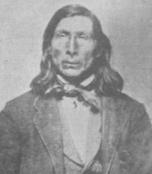
Thomas Jefferson came to Suffolk to study the language of the Montauks. He traveled though Amityville on the South Road which was originally an Indian path. In the East County he made a record of their language because there was some belief that they were descended from Egyptians who crossed the Atlantic. On this page is a picture of David Pharoah. His name is Pharoah because of this belief.
 |
 Steven Talking Horse of Suffolk County
 |
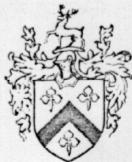 Coat of Arms of the Underhills. John Underhill was an expert Indian fighter as well as a friend to many Indians such as the Matinecocks that gave him 150 acres near Oyster Bay, named "Killingworth" |
| << David Pharaoh, the last pure Montauk Indian. Note that they dressed in regular clothing even 100 years ago. Notice the picture at the top of the page where they are wearing headdresses. They got the idea for this from the 19th century mass media depiction of Indians of the West. |
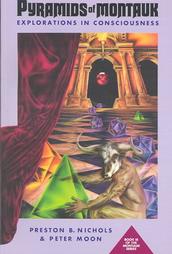 |
At right is a book about the widespread belief that some of
the ancestors of the Suffolk Indians came from Egypt. There actually were pyramids on Montauk Point that many say were Indian mounds |